Team That, Team Who, or Team Which
Throughout this guide, I will define team that, team who, or team which, provide clear contextual examples, identify common mistakes, […]
Team That, Team Who, or Team Which Read More »


Throughout this guide, I will define team that, team who, or team which, provide clear contextual examples, identify common mistakes, […]
Team That, Team Who, or Team Which Read More »

Choosing between invision or envision matters for writers, editors, product teams, and anyone who wants clear, professional prose. In this
Invision or Envision Read More »

Choosing between mine as well, might as well, or mind as well matters because small differences in words change meaning,
Mine As Well, Might As Well, or Mind As Well Read More »

Writers and editors often ask what are staccato sentences because the pattern can change tone, pace, and emphasis in prose.
What Are Staccato Sentences Read More »
“Envolved” is not a word. The correct spelling is always “involved” — there is no such word as “envolved” in
“Envolved” or “Involved”: Which Is Correct? Read More »
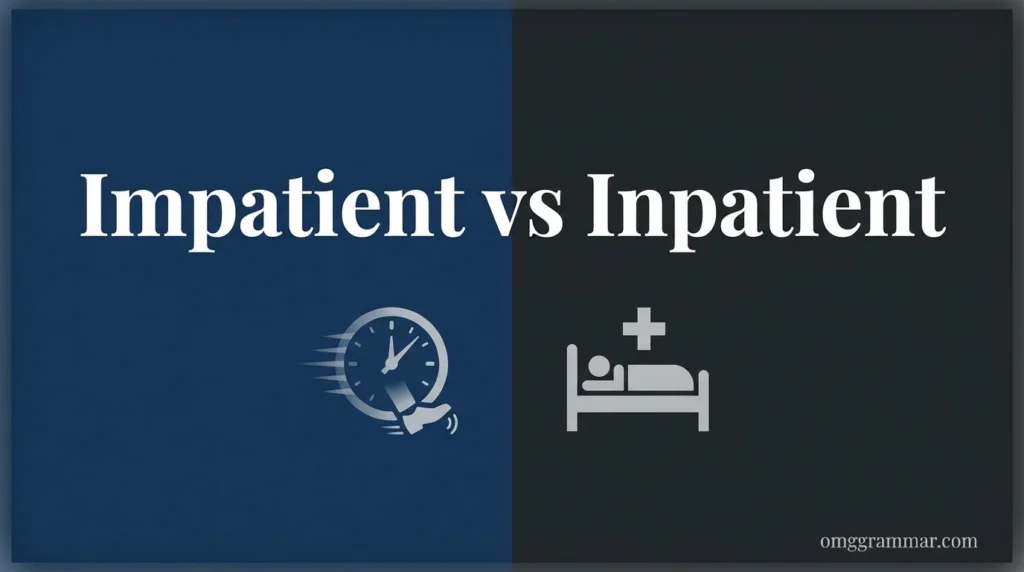
“Impatient” and “inpatient” look nearly alike but mean entirely different things. “Impatient” is an adjective that describes a feeling of
Impatient vs Inpatient: What’s the Difference? Read More »
“That’s or thats”: only “that’s” with an apostrophe is a real English word. “That’s” is a contraction of “that is”
That’s or Thats: Which Is Correct? Read More »
The confusion between propose and purpose stems from their similar spelling, but these words function differently and carry distinct meanings.
Propose vs Purpose: Understanding the Difference Read More »
“By which” and “in which” both introduce relative clauses, but they work with different verbs and express different relationships. “By
By Which or In Which: What’s the Difference? Read More »