Through the Roof: Meaning and Usage Explained
Through the roof means something has gone way up or gotten extremely high. When you say prices, costs, or numbers […]
Through the Roof: Meaning and Usage Explained Read More »


Through the roof means something has gone way up or gotten extremely high. When you say prices, costs, or numbers […]
Through the Roof: Meaning and Usage Explained Read More »
The correct spelling is “dammit” with two m’s. This informal interjection comes from “damn it” and should be written as
Dammit vs Damnit: Which Spelling Is Correct? Read More »
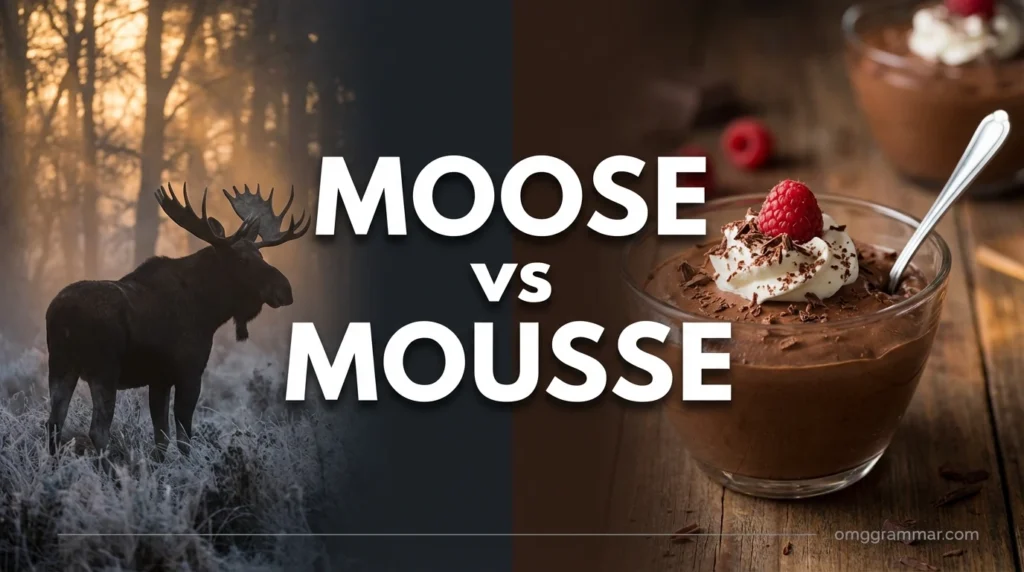
A moose is a large antlered animal found in northern forests, while mousse refers to either a light dessert or
Moose vs Mousse: What’s the Difference and When to Use Each? Read More »
Fair means acceptable quality with visible flaws, while good means solid quality that meets expectations. Fair ranks as “okay but
Fair vs Good: The Quality Rating Difference Explained Read More »
“Receiver” is the only correct spelling. “Reciever” is a common misspelling that breaks the fundamental spelling rule “i before e
Receiver vs Reciever: Which Spelling Is Correct? Read More »
Checkup is a noun meaning an examination or inspection, while check up is a verb phrase meaning to verify or
Checkup vs Check-Up — Which Is Correct? Read More »
Appal vs appall are two spellings of the same word meaning to shock, horrify, or deeply dismay someone. “Appal” is
Appal vs Appall — Difference and Usage Explained Read More »
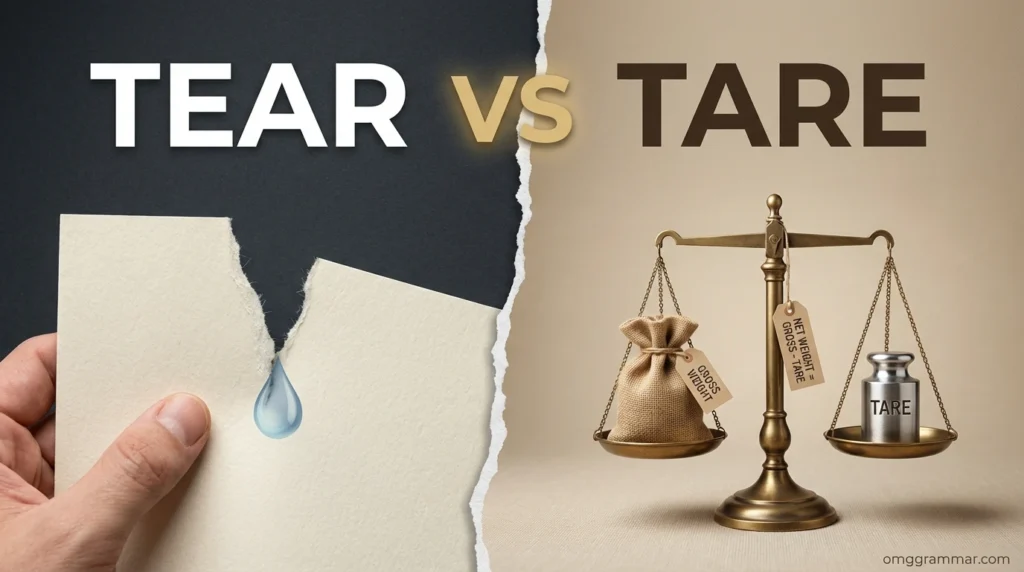
“Tear” means to rip something apart or refers to the result of ripping, while “tare” means the weight of an
Tear vs Tare — When to Use Each Word Read More »
When choosing between “who else” and “whom else,” use “who else” when the phrase acts as the subject performing an
Who Else vs Whom Else — Usage and Rules Read More »
The difference between day off vs off day comes down to presence and performance. A day off means scheduled time
Day Off vs Off Day — Meaning, Usage & Examples Read More »