Fair means acceptable quality with visible flaws, while good means solid quality that meets expectations. Fair ranks as “okay but limited.” Good ranks as “reliable and satisfactory.” This one-word difference changes how people see products, performance, and ratings.
The Quality Scale: Where Fair and Good Sit
Fair and good are both quality descriptors. They sit at different levels on rating scales.
Fair sits in the middle zone. It means something works but has problems. When I review manuscripts, “fair” tells writers their work is passable. It needs improvement. The word signals caution without being harsh.
Good sits higher on the scale. It means solid performance with few issues. Professional editors use “good” to show approval. The item or work meets standards reliably.
The Rating Rule: Fair = functional but flawed. Good = dependable and satisfactory.
Think of it as a ladder. Fair is the middle rung—adequate but nothing special. Good is two rungs higher—solid and dependable.
In my editing work, this shows up constantly. A fair argument covers basics but lacks depth. A good argument has clear reasoning and evidence. That single word tells readers very different things about quality.
How to Use Fair vs Good
Using Fair: Average Quality
Fair appears in ratings that signal adequacy without praise. The word works for items with visible wear or performance that just meets minimums.
Product conditions:
- “This phone is in fair condition—it works but has screen scratches.”
- “The car runs in fair condition with some engine wear.”
Performance reviews:
- “Your essay provides a fair analysis of the main points.”
- “The presentation was fair but lacked strong visuals.”
Credit scores:
- “A fair credit score is 580 to 669 on the FICO scale.”
- “The loan terms are fair, though not favorable.”
In business writing, I’ve noticed fair helps acknowledge effort without strong praise. It stays diplomatic while pointing out room for growth.
Using Good: Solid Quality
Good shows up when quality exceeds basic adequacy. Across hundreds of manuscripts, I’ve seen this word validate positive work.
Quality descriptions:
- “The laptop is in good condition with minor wear.”
- “She submitted good work that shows clear understanding.”
Approvals:
- “That’s a good point worth exploring.”
- “He has a good credit score of 720.”
General praise:
- “The restaurant serves good food consistently.”
- “This is a good time to address the issue.”
Professional writers use good to show confidence. Client documents often use this word in recommendations and endorsements.
Different Settings, Different Meanings
Academic settings treat fair as C-level work. Students feel underwhelmed getting “fair” compared to “good.”
Consumer ratings use these terms with real money impact. A fair-condition item sells for 30-40% less than a good-condition one. Buyers expect more defects when they see “fair.”
Performance reviews work the same way. Calling work “fair” signals improvement is needed. Calling it “good” validates solid contribution. In my editing practice, the choice affects morale and motivation.
Common Mistakes with Fair vs Good
| Incorrect | Correct | The Fix |
| “The movie was fair to watch.” | “The movie was fair quality overall.” | Fair describes quality, not experiences. |
| “She has good ethics judging others.” | “She judges others fairly.” | Use “fairly” as the adverb for judgment. |
| “This is fair quality for price.” | “This is of fair quality for the price.” | Add “of” for correct grammar. |
| “His credit is good enough.” | “His credit is fair—adequate for approval.” | Match the word to the actual level. |
| “The deal is fair or good.” | “The deal is fair and equitable.” | Fair can mean just/equitable OR average quality. |
Why People Mix These Up
Writers confuse fair when it has two meanings. Fair means (1) average quality, and (2) just treatment. This error shows up in performance reviews. People mix up fairness with quality level.
In product descriptions, sellers don’t realize buyers see these words differently. A “fair” laptop means visible wear. “Good” means minimal issues. I’ve seen sellers undervalue items by choosing “fair” when “good” fits better.
The psychology matters. Fair feels slightly negative—”just okay.” Good feels reassuring. It builds confidence.
How to Remember Fair vs Good
The Ladder Test
Picture quality ratings as a ladder. Fair is the middle rung. Good sits two rungs higher. A technique I recommend: if you’d hesitate to recommend it, call it fair. If you’d confidently recommend it, that’s good.
The Satisfaction Question
Ask yourself: “Am I satisfied or just accepting it?” Satisfaction means good. Acceptance means fair.
When editing, I use this test all the time. If a section makes me nod in approval, it’s good. If I think “well, it covers basics,” that’s fair. The gut reaction tells me which word fits.
Professional writers learn this through practice. Fair signals adequate work with gaps. Good signals reliable quality worth endorsing.
Visualizing Fair vs Good
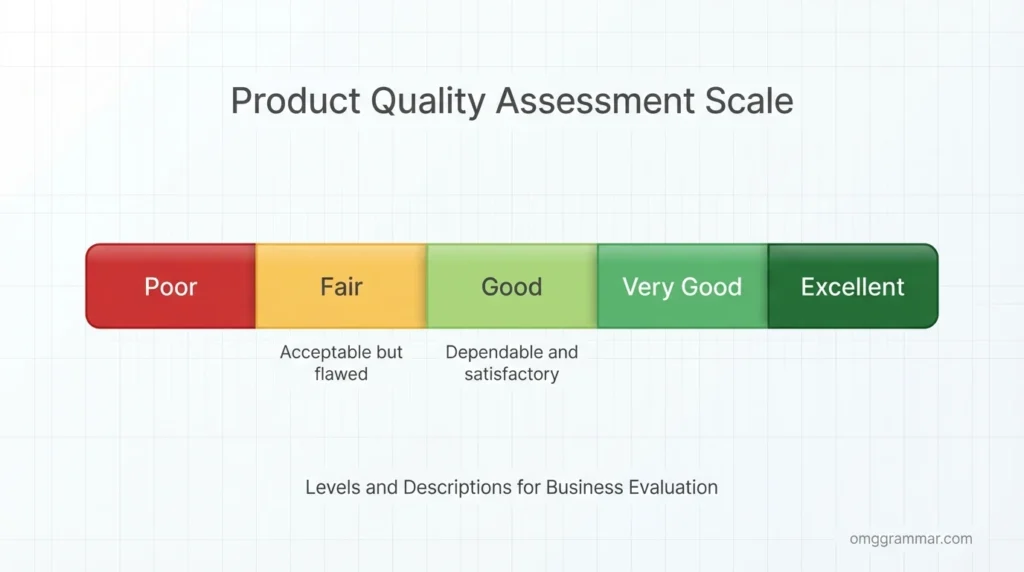
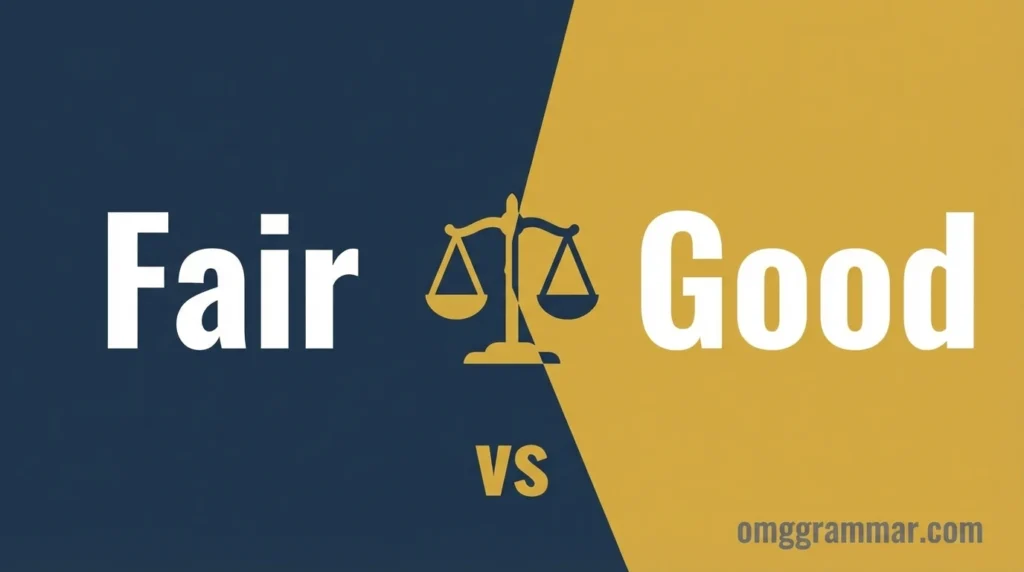
The quality scale shows the key difference. Fair sits between unsatisfactory and positive. It means “works but limited.” Good moves into positive territory. It means “reliable and satisfactory.”
This visual explains why word choice matters. Buyers see “fair” and lower expectations. They see “good” and feel confident. Managers pick different words to send different messages about employee work.
Synonyms and Alternatives
Fair Alternatives
For average quality:
- Adequate—meets minimum needs
- Acceptable—passable
- Mediocre—ordinary
- Decent—respectable but plain
- Passable—just good enough
For just/equitable:
- Impartial—no bias
- Unbiased—neutral
- Equitable—fair to all
- Even-handed—treats equally
Good Alternatives
For quality:
- Satisfactory—meets needs
- Solid—reliable
- Sound—excellent condition
- Fine—high quality
- Reliable—consistently good
For approval:
- Competent—has ability
- Proficient—skilled
- Capable—able to do well
The difference: fair alternatives mean “barely adequate.” Good alternatives mean reliability and positive quality.
Conclusion
The fair vs good distinction becomes natural with practice. Fair means adequate quality with limits. Good means reliable performance that meets expectations.
This difference shapes perception strongly. In ratings and reviews, the right word communicates honest assessment. Fair prepares people for limitations. Good builds confidence in quality.
Next time you choose between these words, ask: am I describing barely acceptable or genuinely satisfactory? That tells you which word fits. Use fair for adequacy with reservations. Choose good for reliable, positive quality.
FAQs
Fair means acceptable with flaws. Good means satisfactory quality meeting expectations.
Yes. Poor means unacceptable or failing standards. Fair means meeting minimum requirements with visible limits.
No. Fair means “just okay” needing improvement. Good means solid, satisfactory work.
Fair condition means the item works but shows wear or damage. It’s usable but clearly used. Fair items sell for 30-40% less than good condition.
Fair has two meanings from Old English “fitting.” One evolved to mean impartial. Another means average quality. Context shows which applies.
Use fair (adjective) for quality: “fair condition.” Use fairly (adverb) to modify verbs: “treated fairly.”
Good is better. It validates solid work and builds morale. Fair signals meeting minimums with room to improve.