Ingrained vs Engrained: Which is correct?
Ingrained vs Engrained: Both “ingrained” and “engrained” are correct spellings of the same word, meaning deeply embedded or firmly established. […]
Ingrained vs Engrained: Which is correct? Read More »

Ingrained vs Engrained: Both “ingrained” and “engrained” are correct spellings of the same word, meaning deeply embedded or firmly established. […]
Ingrained vs Engrained: Which is correct? Read More »
Hastle vs Hassle: “Hassle” is the only correct spelling. “Hastle” is a misspelling that stems from phonological confusion—your brain mishears
Hastle vs Hassle: A Common Trap Read More »
Indolence vs. Insolence: Indolence describes laziness or habitual avoidance of work, while insolence refers to rude, disrespectful behavior toward others—especially
Indolence vs. Insolence: The Definitive Guide Read More »
“Comma before or after” asks where to place a comma in relation to words, clauses, or quotation marks; the right
Comma Before Or After Read More »
Technically, Imbed vs Embed asks which spelling belongs in modern English: both show up, but embed serves as the standard
Gluing vs. glueing asks whether to drop the final silent e when you add -ing to the verb glue. The
Gluing vs. Glueing Read More »
A predicate nominative names the subject after a linking verb; it answers the question “Who or what is the subject?”
Predicate Nominative — The Clear Rule Read More »
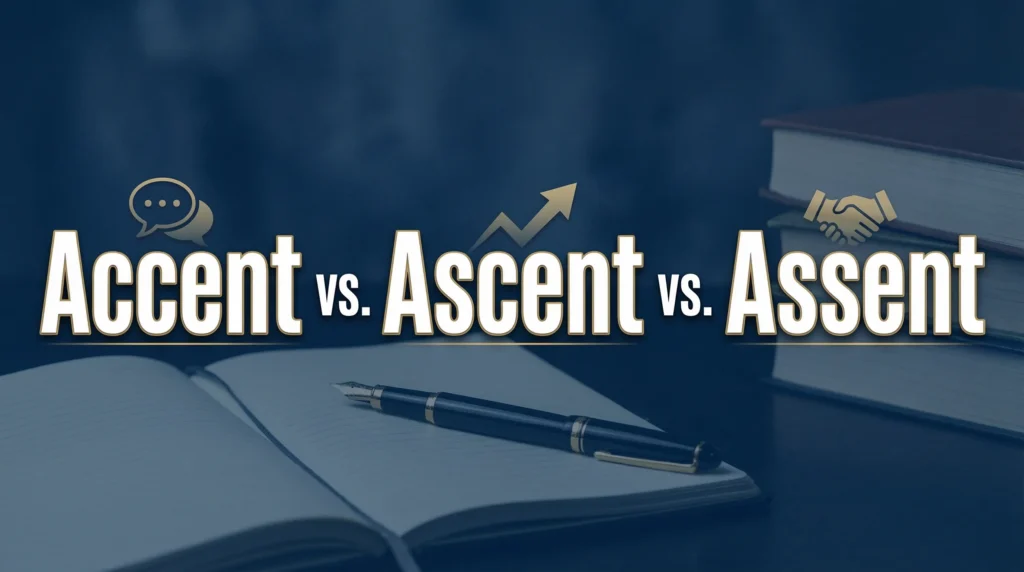
Technically, Accent vs. Ascent vs. Assent asks about three different words that sound similar but mean three separate things: accent
Accent vs. Ascent vs. Assent Read More »
Saying something under one’s breath means speaking so quietly that only the speaker or a nearby listener hears it; people
under one’s breath Read More »

Three Sheets to the Wind describes someone who behaves very drunk or unsteady from alcohol; the phrase paints a nautical
Three Sheets to the Wind Read More »