Three Sheets to the Wind describes someone who behaves very drunk or unsteady from alcohol; the phrase paints a nautical image of loose sails and loss of control. That phrase carries both humor and warning, so use it where tone and context make the meaning clear.
Why The Phrase Still Shows Up
You have likely heard Three Sheets to the Wind in casual talk, television, or writing. The phrase sounds old-fashioned and vivid, and people use it to describe a person who stumbles, slurs, or loses usual restraint after drinking. That colorful image comes from ships and sails, and the metaphor stuck because it captures both motion and lack of control.
Writers enjoy the phrase because it packs a scene into three short words. Speakers keep it because it signals a social state without long explanation. But the expression also risks trivializing serious alcohol problems if people use it lightly. You will learn the exact meaning, where the phrase comes from, how to use it safely, how it behaves grammatically, why the brain remembers it, and how authors use it to shape character. By the end you will spot the right contexts to use Three Sheets to the Wind and when to choose a softer or more clinical phrase instead.
The Core Concepts Of “Three Sheets to the Wind”
Definitions And Meanings
Three Sheets to the Wind refers to a person who shows clear signs of intoxication: unsteady gait, slurred speech, impaired coordination, erratic decisions. The phrase usually carries a playful or colloquial tone, but you can also hear it in serious reporting when witnesses describe a condition at an event.
People employ the image to describe visible behavior rather than internal states. Saying someone is Three Sheets to the Wind tells listeners the person appears intoxicated; it does not diagnose dependence or addiction.
Etymology And Evolution
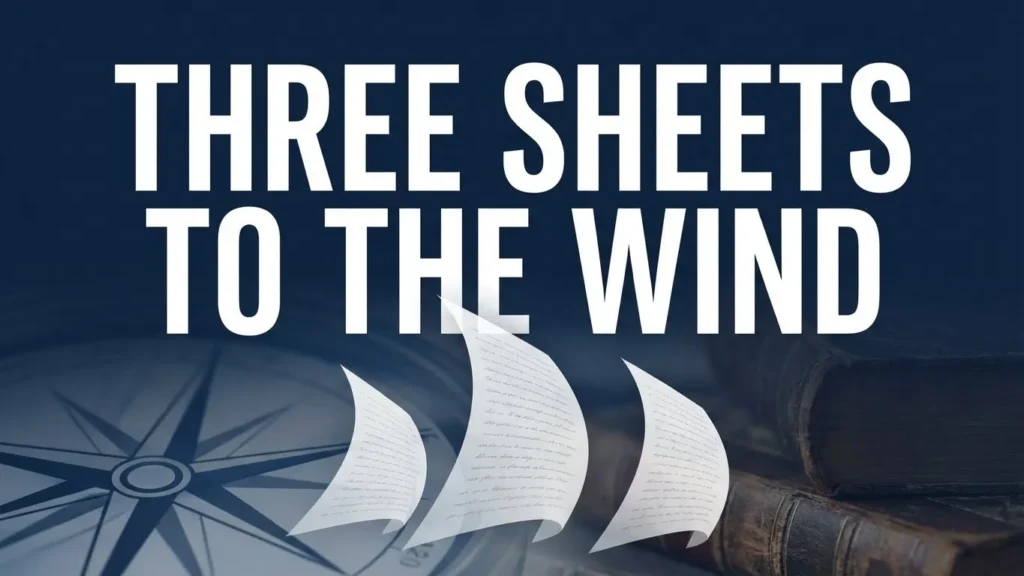
The image comes from sailing. A “sheet” means a rope that holds a sail’s lower corner. When one sheet blows loose, a sail flaps; when three blow loose, the ship loses control. Mariners used the phrase to describe chaotic motion at sea. Over time, writers applied that motion metaphor to humans who stagger as if they, too, lose steady command.
Authors first recorded the phrase in print in the 19th century. Newspapers and sailors’ tales made it common on land. From barrooms to novels, the expression moved into everyday speech. The nautical link gives the phrase color while anchoring it in a clear image: loose rigging equals unstable motion.
Grammatical Function And Mechanics
You can use Three Sheets to the Wind as a predicate adjective: He was three sheets to the wind. You can also use it adverbially: She returned home three sheets to the wind. Writers sometimes capitalize it in titles for emphasis, but standard prose keeps it lowercase. When you need a more formal tone, choose intoxicated or drunk.
Golden Rule: Use Three Sheets to the Wind to describe observable drunken behavior; prefer clinical terms in formal or sensitive contexts.
Contextual Examples
Standard Usage
Example 1: “After the party, Mark stumbled out of the taxi, clearly three sheets to the wind.”
- Subject: Mark
- Verb: stumbled
- Object/Complement: out of the taxi, clearly three sheets to the wind
- Why It Works: The sentence shows the visible behavior (stumbling) and tags the state with the nautical idiom, so readers infer intoxication.
“She laughed loudly and joked with strangers, a little three sheets to the wind but still friendly.”
Why It Works: The line pairs behavior with tone to soften judgment.
“The witness described the man as three sheets to the wind at the scene.”
Why It Works: The phrase appears in reported speech to note observed intoxication.
“He sang off-key all night, three sheets to the wind and proud of it.”
Why It Works: The sentence adds character and attitude to the image.
Alternative Usage Or Nuance
Example 1: “By midnight they were three sheets to the wind, though nobody drove home.”
- Subject: they
- Verb: were
- Object/Complement: three sheets to the wind, though nobody drove home
- Why It Works: The sentence signals group intoxication and notes a safety detail, balancing humor and responsibility.
“At times the phrase appears jokingly among friends, but at other times it flags a safety issue.”
Why It Works: The nuance shows social tone differences.
“Someone might call a clumsy dancer three sheets to the wind even if the person only enjoyed a few drinks.”
Why It Works: The sentence warns about overstatement.
“In health writing, authors avoid the idiom and say ‘intoxicated’ to be precise.”
Why It Works: The sentence directs readers to context-appropriate language.
Professional And Everyday Contexts
Example 1: “Safety officers logged one attendee as three sheets to the wind and escorted them to a sober room.”
- Subject: Safety officers
- Verb: logged / escorted
- Object/Complement: one attendee as three sheets to the wind / to a sober room
- Why It Works: The sentence pairs observation with a clear safety action.
“News reporters quoted witnesses who said the politician seemed three sheets to the wind.”
Why It Works: The phrase appears as reported perception in journalism.
“At family gatherings, people sometimes say ‘He’s three sheets to the wind’ jokingly when mood and volume rise.”
Why It Works: The example maps social usage and tone.
“Medical staff prefer clinical language: ‘intoxicated’ or ‘under the influence’ rather than the idiom.”
Why It Works: The sentence clarifies register and audience.
Literary Usage And Cultural Impact
Famous Examples In Literature
Writers use the phrase to sketch a scene fast. A novel might read: He came in, three sheets to the wind, and declaimed his grievances to the room. That use creates comic or tragic tension depending on surrounding detail.
Authors sometimes use the image to show decline or vulnerability. A poet might write of sailors “three sheets to the wind” and then use that image as metaphor for national chaos. Playwrights exploit the phrase in dialogue because it sounds like speech, not exposition.
Why Writers Favor The Phrase
The phrase combines a sharp visual (loose sails) with human motion. That pairing gives writers a compact way to show loss of control. Audiences hear the rhythm and picture the motion. The idiom’s nautical origin also lends a touch of age and authority, which works well in historical settings or in characters who speak with maritime slang.
Synonyms, Antonyms, And Related Concepts
Close Synonyms And Distinctions
If you need alternatives, choose them by tone:
- Intoxicated — clinical and neutral.
- Drunk — direct and informal.
- Plastered / Smashed — slang, stronger, often coarse.
- Impaired — technical, useful in legal or medical writing.
Use Three Sheets to the Wind for colorful conversation; use intoxicated in reports and sensitive contexts.
Regional Differences (US vs. UK)
The phrase appears in both British and American speech without major change. Regions with strong sailing traditions may favor it more. In other English-speaking areas, local idioms with similar meaning exist—hammered or pissed in British slang—but the nautical phrase remains widely understood.
How The Brain Processes
That idiom sticks because the brain prefers images that combine motion and cause. When listeners hear Three Sheets to the Wind, they quickly conjure sails, ropes, and unsteady motion. That vivid image speeds comprehension.
Idioms also store as single units in memory. Frequent exposure makes Three Sheets to the Wind activate as one idea rather than three separate words. The phrase then functions like a label the brain applies fast, freeing mental resources for other details.
However, this shortcut can mislead. The image implies humor and downplays harm, so listeners may treat serious intoxication lightly. Speakers should remember that memory shortcuts affect emotional response and choose language that matches the situation.
Etymological Deep Dive
The word sheet in sailing means a rope controlling the foot of a sail. When sailors reported loose sheets, they described sails flapping and the vessel listing. The tally of three sheets emphasized complete loss of sail control.
Over time, people borrowed that vivid observation for human motion. The migration from maritime term to bar-room metaphor followed canal and port towns, taverns near docks, and sailors’ tales that travelers spread. That pathway explains the phrase’s rustic charm and why it feels anchored in history.
The Error Log: Common Mistakes And Corrections
| Incorrect Phrasing | Correct Phrasing | The Fix |
| “He was three sheet to the wind.” | “He was three sheets to the wind.” | Use the plural sheets and keep the idiom intact. |
| “She’s three sheets in the wind.” | “She’s three sheets to the wind.” | Use the standard preposition to for idiomatic accuracy. |
| “Three sheets in wind.” | “Three sheets to the wind” | Restore article and preposition for clarity. |
| “He was three sheets to wind, so he drove.” | “He was three sheets to the wind, so he did not drive.” | Avoid implying dangerous actions; clarify safe responses instead. |
Psychological Breakdown For The Top Two Errors
People misremember prepositions and plural forms because they hear the phrase more than they see it written. Speech favors shortcuts; writers must correct them. The other common misuse places the idiom next to risky behaviors without noting consequences. Habitual jokiness about intoxication can normalize dangerous choices. Editing to show consequences—escort, sober room, no driving—counteracts that normalization.
Practical Tips And Field Notes
Field Note From Experience
I edited a magazine column that described a character as three sheets to the wind in a way that glorified binge drinking. Readers complained. I advised the writer to keep the phrase for voice but to add context: the character later faces consequences. The revised piece still rang with color, and readers found the arc more believable.
That change taught me to keep colorful language but pair it with accountability when writing about risky behavior.
Mnemonics And Memory Aids
Remember the phrase with this image: three loose ropes make a sail flap wildly. Picture the sail and then imagine the staggering human. The number three helps too: one loose sheet looks manageable, two looks wobbly, three looks out of control. That progression makes the idiom memorable and correct.
How To Use “Three Sheets to the Wind” Responsibly
- Choose the phrase for vivid, conversational writing.
- Use clinical terms for medical or legal contexts.
- Avoid the phrase when discussing addiction or long-term alcohol issues without care.
- If describing an event with potential danger, follow with actions taken: escorted home, refused service, sought help.
Those steps let you keep the phrase’s flavor while showing responsible awareness.
Literary Analysis
Writers use the phrase to show loss of inhibition quickly. In dialogue, it sounds natural. In narration, it compresses scene. Authors often deploy the idiom to reveal tension: a politician speaking three sheets to the wind becomes vulnerable; a sailor so described evokes authenticity.
Sometimes writers subvert the idiom. An author might call a character three sheets to the wind metaphorically to describe a city in chaos or a plan unraveling. That figurative use expands the phrase beyond alcohol, but it retains the core image: loss of control.
Conclusion
Three Sheets to the Wind gives speakers and writers a vivid way to describe clear intoxication. Use it for color and voice, but match register to context. When safety or sensitivity matters, choose a clinical or neutral term and document actions taken. That approach preserves the phrase’s charm without overlooking consequences.
FAQs
Three Sheets to the Wind means a person shows obvious drunkenness—staggering, slurred speech, or unsteady motion. The idiom names observed behavior rather than diagnosing addiction.
No, not usually. Three Sheets to the Wind stays a casual, descriptive phrase. However, avoid it when the subject faces health or legal risk; use clinical terms in sensitive situations.
The phrase arose from sailing. A sheet is a rope controlling sails, and when three sheets blow loose, the ship behaves wildly. Sailors adapted the image to describe human unsteadiness.
Use caution. Three Sheets to the Wind reads as informal and idiomatic. Prefer intoxicated or under the influence in formal, legal, or medical writing.
Yes. Say intoxicated, very drunk, or heavily impaired for neutral or formal tone. Slang alternatives include hammered or smashed but those carry coarser registers.
No. The phrase describes acute intoxication, not chronic dependence. Do not use it as a diagnosis.
Note observable behavior and follow with safety actions: refusal of service, escort, or medical attention. That practice avoids glamorizing risky behavior.
Yes, writers sometimes use it metaphorically for any situation that loses control. Keep the metaphor clear so readers follow the transfer.